NDAX vs Bitbuy: fees, withdrawals and safety
Updated November 2026. Checked against the regulators' registers and each platform's own pages.
Who pays us: Neither NDAX nor Bitbuy pays us. We have no affiliate or referral deals in place yet, so these links earn us nothing. How we make money
 NDAX homepage, cropped to logo and menu
What this proves
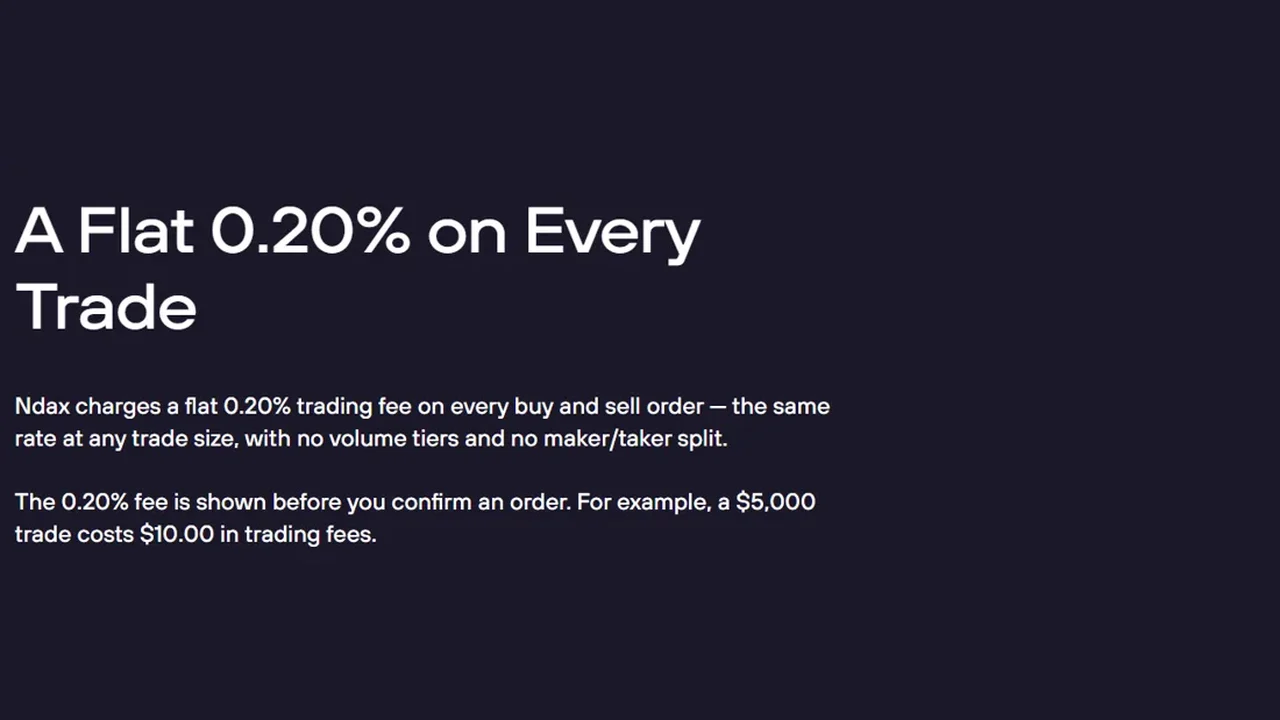
NDAX's fee page says it charges a flat 0.20% trading fee on every buy and sell order, shown before you confirm.

NDAX
9.3Strong · out of 10
Best for a flat, stated trading fee on every order
- Trading fee
- Flat 0.20%
- Interac in
- No fee
- Interac out
- $1.50, up to $10,000
Watch: Interac withdrawals cost $1.50 and bank withdrawals $4.99
 Bitbuy homepage, cropped to logo and menu
What this proves
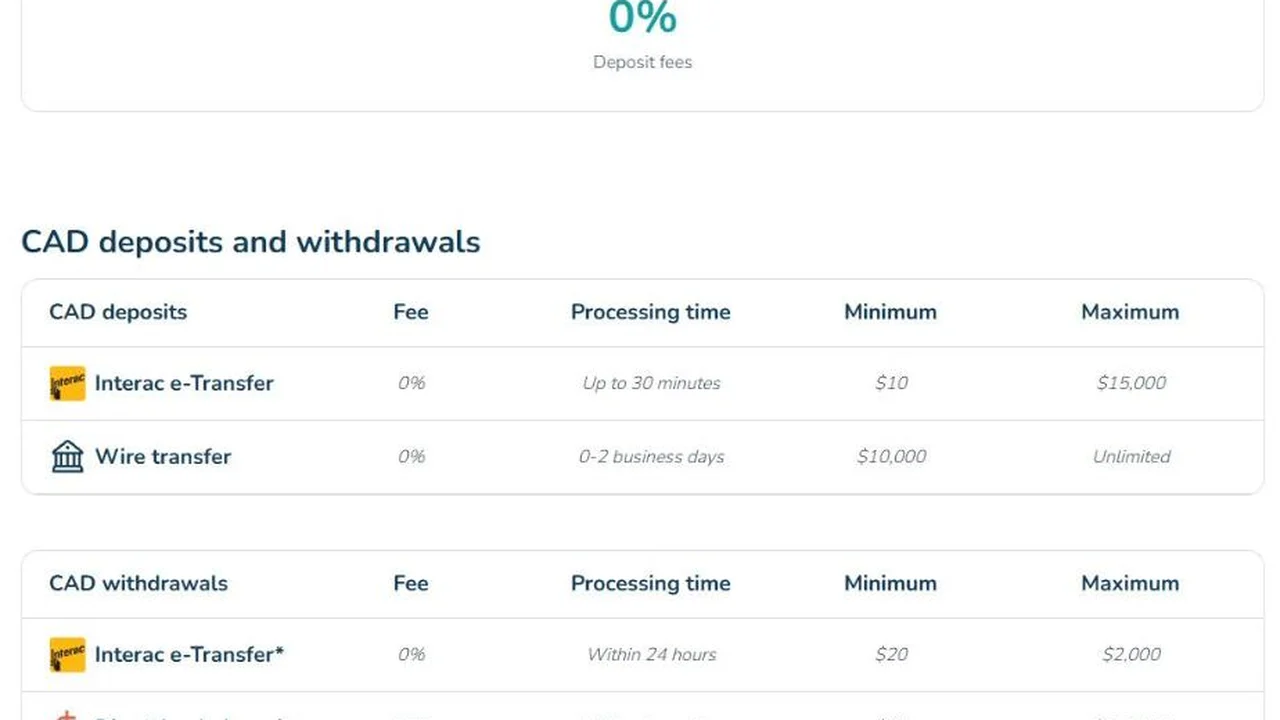
Bitbuy's fee schedule lists 0% for Interac e-Transfer deposits and withdrawals, with withdrawals capped at $2,000.

Bitbuy
8.8Strong · out of 10
Best for no-fee Interac deposits and withdrawals
- Express Trade
- Spread, 0.5% to 3.85% range
- Pro Trade
- 0.50% maker and taker
- Interac out
- No fee, up to $2,000 a day
Watch: Express Trade includes a spread; only a 0.5% to 3.85% range is published
NDAX and Bitbuy are two Canadian crypto platforms that sit in the same regulatory group. Both are run by investment dealers that are CIRO members, and both keep most client crypto with the same two outside custodians. Where they part ways is in how they charge for trades and for moving cash in and out.
Everything below comes from our two reviews, which are built from each platform’s own Canadian pages. Where one review covers a point and the other doesn’t, we say so.
The short answer
NDAX charges a flat 0.20% on every buy and sell, with no spread on top and no fee to deposit. Taking Canadian dollars out costs $1.50 by Interac e-Transfer or $4.99 by bank transfer.
Bitbuy has two screens. Express Trade has no separate fee but builds its cost into a spread, which Bitbuy’s legal fee schedule puts somewhere between 0.5% and 3.85%. Pro Trade charges a stated 0.50%. Interac deposits and withdrawals carry no fee, but withdrawals are capped at $2,000, one every 24 hours, and 29 of its coins can’t be sent to your own wallet.
Side by side
| NDAX | Bitbuy | |
|---|---|---|
| Registration | Investment dealer, CIRO member (Ndax Canada Inc.) | Investment dealer, CIRO member (Coinsquare Capital Markets Ltd.) |
| Trading cost | Flat 0.20% on every trade | Express Trade: spread of 0.5% to 3.85%; Pro Trade: 0.50% maker and taker |
| Interac in | No fee, no minimum | No fee, $10 to $15,000 |
| Interac out | $1.50, up to $10,000 per transaction | No fee, $20 to $2,000, one every 24 hours |
| Bank withdrawal | $4.99 by EFT | 1.5% by bank deposit or wire |
| Moving crypto out | Flat fee per coin, shown before you confirm; table not published when we checked | Depends on the coin; 29 trade-only coins can’t be withdrawn |
| Custody | At least 80% with BitGo and Coinbase Custody | Cold storage with Coinbase Custody and BitGo |
| Staking commission | 20% of rewards | Varies by coin; 25% for Ethereum |
Fees
NDAX states its full trading cost up front. Its fee page says it charges “a flat 0.20% trading fee on every buy and sell order,” at any trade size, with no volume tiers and no split between makers and takers. You trade at the order book price and see the fee before you confirm. On a $1,000 trade, that’s $2.
Bitbuy charges in two ways. Express Trade, its simple screen, has no separate trading fee, but Bitbuy says it “generates trade quotes using a spread” without saying how wide on its fee page. Its legal fee schedule gives a range of 50 to 385 basis points (0.5% to 3.85%), depending on order size, volatility and liquidity. Pro Trade, its order book screen, charges 0.50% for both makers and takers, or $5 on a $1,000 trade. Even at the bottom of that range, Express Trade costs more than NDAX’s 0.20%, and because you don’t know where in the range a trade falls, you can only compare it properly with NDAX by checking the quoted price against the market price before you buy.
Our crypto fees comparison sets out what a buy costs across registered platforms, and our fees study covers what each platform’s fee page leaves out.
Cash moves the other way. Both charge nothing for Interac e-Transfer deposits. NDAX sets no minimum and Bitbuy takes $10 to $15,000 per deposit. Both take wires with no fee, NDAX with no stated minimum and Bitbuy from $10,000. On withdrawals, Bitbuy charges nothing by Interac but caps each one at $2,000 and allows one every 24 hours. NDAX charges $1.50 by Interac, with a limit of $10,000 per transaction. For larger amounts by bank, NDAX’s flat $4.99 EFT fee compares with Bitbuy’s 1.5% on bank deposit and wire withdrawals.
Coins and moving crypto out
Our NDAX review doesn’t list how many coins NDAX supports, and our Bitbuy review doesn’t give a total for Bitbuy either. What the Bitbuy review does cover is a list of 29 trade-only coins, including Sui and Toncoin, that can’t be deposited to or withdrawn from a Bitbuy account. You can only buy and sell those inside Bitbuy. Our NDAX review doesn’t mention any trade-only coins.
Sending crypto to an outside wallet costs a flat amount per coin and network on NDAX, shown before you confirm. Its table of those amounts didn’t load when we checked. On Bitbuy, some coins, such as XRP and Litecoin, carry no withdrawal fee, while Bitcoin, Ethereum and others carry a fee set by network conditions. Sending crypto in costs nothing on Bitbuy. NDAX also charges no fee on crypto deposits.
Both offer staking. NDAX keeps 20% of staking and Auto Earn rewards. Bitbuy keeps a commission that varies by coin, 25% for Ethereum.
Safety
Both hold the higher of the two types of registration for crypto platforms in Canada. Ndax Canada Inc. is an investment dealer in every province and territory and a member of CIRO and CIPF, with its latest decision on the regulators’ register dated 19 December 2024. Bitbuy is a trade name of Coinsquare Capital Markets Ltd., an investment dealer and CIRO member that’s also registered with FINTRAC, with its latest decision dated 11 October 2024.
One caveat on Bitbuy’s ownership. A banner on its homepage says “Bitbuy is now part of Robinhood,” while its footer still reads “A WonderFi Company.” The registered company hasn’t changed. Coinsquare, a separate brand with its own app, runs under the same registration.
On custody, the two are close. NDAX says at least 80% of client crypto is held with outside custodians, named as BitGo Trust Company and Coinbase Custody Trust Company, mostly in cold storage. It says it can’t pledge or lend client crypto except coins you’ve chosen to stake, and checks its holdings against its records each month. Bitbuy says client crypto is held in cold storage by Coinbase Custody and BitGo, with some held briefly in its own hot wallet. It says its custodians carry a combined US$680 million in insurance. NDAX holds its own insurance bond, and its custodians carry their own cover.
Neither platform’s crypto is covered by CIPF. Both say Canadian dollars in your account have CIPF cover, but crypto doesn’t, and it isn’t covered by CDIC either. The insurance both describe is private, has limits and doesn’t protect you from a fall in price.
Both also mention investment limits. NDAX says you may face limits on certain coins if you live outside British Columbia, Manitoba and Quebec. Bitbuy says you may face yearly limits depending on your income, net worth and province.
Who each suits
These are fits by feature, not advice on what to buy.
NDAX suits someone who wants to know the full trading cost before every order, since its 0.20% fee sits on top of the order book price with no spread. It also suits larger bank withdrawals, where its flat $4.99 fee doesn’t grow with the amount.
Bitbuy suits someone who wants to move cash in and out by Interac without a fee and is happy to stay under $2,000 per withdrawal. If you trade on Bitbuy, Pro Trade gives you a stated fee instead of a spread somewhere in a range. Check the trade-only list first if you plan to move coins to your own wallet. Our registered list covers the other platforms.
Frequently asked questions
Is NDAX or Bitbuy safer?
Both are registered as investment dealers and are CIRO members, the higher level of oversight. Both name BitGo and Coinbase Custody as custodians. Neither covers crypto under CIPF.
Which is cheaper, NDAX or Bitbuy?
On stated trading fees, NDAX’s 0.20% is lower than Bitbuy Pro Trade’s 0.50%. Bitbuy’s Express Trade spread falls between 0.5% and 3.85%, so even its lowest point is above NDAX’s 0.20%. On cash withdrawals, Bitbuy charges nothing by Interac, where NDAX charges $1.50.
Can I send crypto to my own wallet from both?
Yes, with limits. NDAX charges a flat fee per coin, shown before you confirm. Bitbuy’s fee depends on the coin, and 29 of its coins can’t be withdrawn.
Is my crypto covered by CIPF on either platform?
No. Both say CIPF covers Canadian dollars in your account, not crypto.
Sources
Checked 10 November 2026. Facts come from our NDAX review and Bitbuy review, and the pages they cite:
- NDAX, fees and regulatory notice
- NDAX, security
- NDAX, user agreement
- Bitbuy, homepage
- Bitbuy, fees
- Bitbuy, security
- Bitbuy, legal and regulatory documents
- Bitbuy, risk statement
- Bitbuy, relationship disclosure
- New Brunswick Financial and Consumer Services Commission, registered crypto asset trading platforms
Update history
- First published.
- First published.
Found something out of date? Tell us.