Crypto tax in Canada: what the CRA says
Updated November 2026. Checked against the regulators' registers and each platform's own pages.
Who pays us: No tax software company pays us. We have no affiliate deals in place yet, so these links earn us nothing. This page is general information from the CRA's own guidance, not tax advice. How we make money
 Koinly site header, cropped to logo and menu
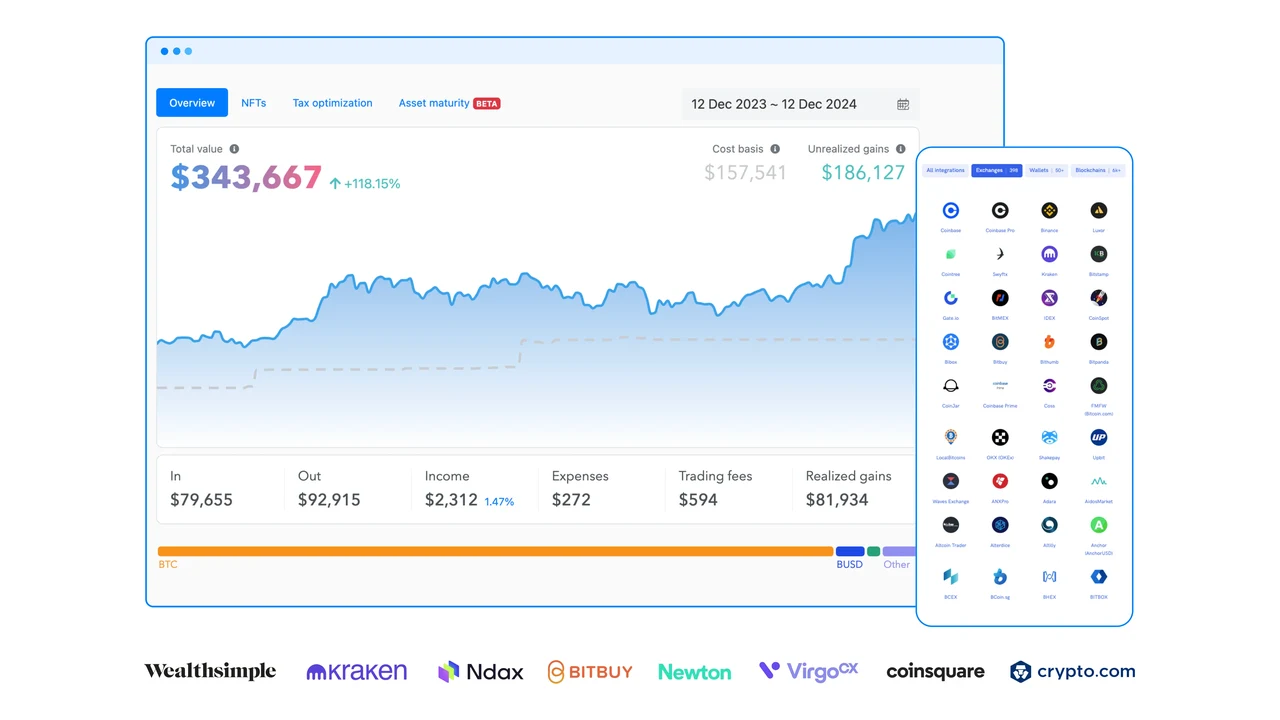

Koinly
Best for a Canadian report with a pre-filled Schedule 3
- Canadian reports
- Schedule 3, ACB method
- Free plan
- Imports up to 10,000 transactions, no report
- Paid reports
- From $49 per tax year (USD as shown to us)
 CoinLedger site header, cropped to logo and menu
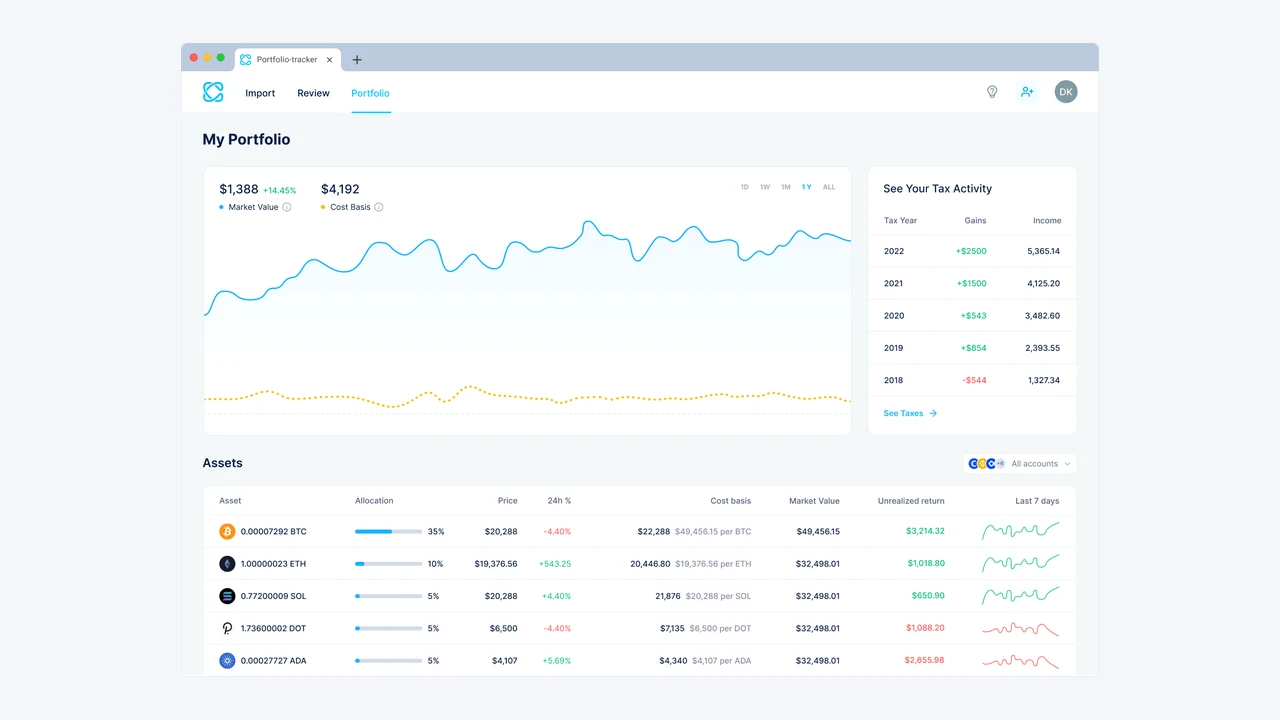

CoinLedger
Best for a one-off report with an adjusted cost option
- Cost methods
- FIFO, LIFO, adjusted cost and more
- Free plan
- Portfolio tracking, no report
- Paid reports
- From $49 for up to 100 transactions (USD as shown to us)
The Canada Revenue Agency treats crypto as property, not money, so most of what you do with it has tax consequences. This page sets out what the CRA’s own guidance says, as published on canada.ca and read on 10 November 2026. It’s general information, not advice for your situation. If your crypto activity is large or complicated, talk to an accountant.
The short answer
- Selling, trading or spending crypto is usually a “disposition” that you must report. Trading one coin for another counts.
- Moving crypto between wallets you own isn’t a disposition.
- Most people report capital gains, and half of a capital gain is taxable. Frequent, business-like trading can make it business income instead, which is fully taxable.
- Staking rewards from a platform are generally income when they’re credited to you.
- Keep records of every transaction for at least six years. Software can help, but the CRA doesn’t endorse any product.
What counts as a disposition
The CRA says you may dispose of crypto when you:
- trade or exchange it for government-issued currency, or for another crypto-asset
- use it to buy goods or services, which the CRA treats as a barter transaction
- give it away or donate it
The CRA says the list doesn’t cover every situation. It also says some transactions aren’t dispositions, “such as transfer of crypto-assets between wallets that you own”. So moving Bitcoin from a registered platform to your own hardware wallet isn’t taxable in itself.
Capital gain or business income?
When you dispose of crypto, the result is either a capital gain (or loss) or business income (or loss). The CRA decides case by case. It lists factors that point towards a business:
- frequent buying and selling
- holding for short periods
- knowledge of or experience in crypto markets
- spending a lot of your time studying them
- borrowing to buy
- advertising that you’ll buy crypto
If it’s business income, you report the full profit or loss. If it’s a capital gain, you include half of it in your income.
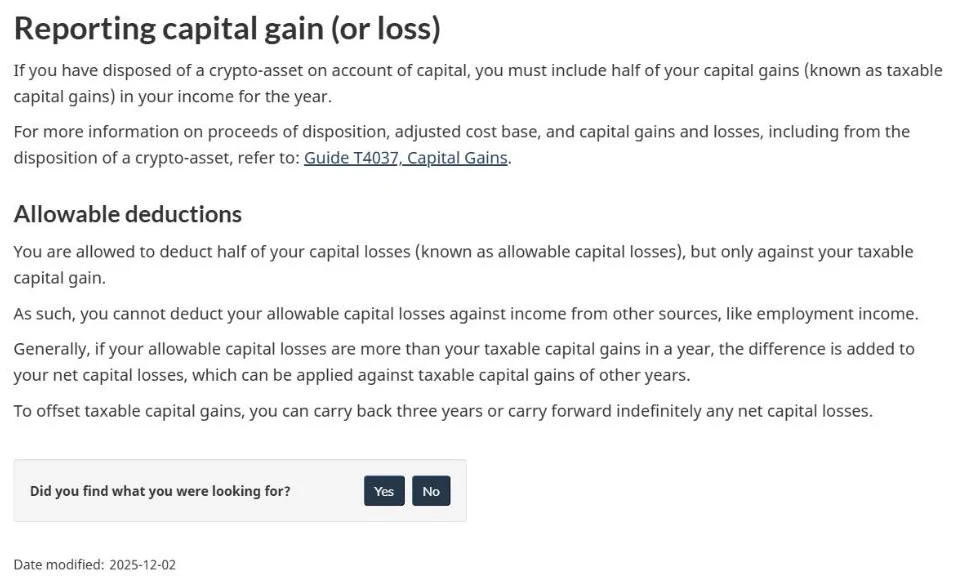
Losses
The CRA says you can deduct half of a capital loss, but only against taxable capital gains, not against other income such as your salary. Unused losses can be carried back three years or forward indefinitely to offset gains in other years.
Working out your gain
A capital gain is what you received for the crypto minus your adjusted cost base (usually what it cost you, plus the costs of buying it) and the costs of selling it. When you hold units of the same coin bought at different prices, their cost is averaged, which is why tracking every buy matters. The CRA’s Guide T4037, Capital Gains, explains how.
Staking and mining
The CRA says rewards from staking crypto on a centralized exchange platform are generally income at the time they’re credited to your wallet on the platform. Mining is usually treated as a business because of the scale and equipment involved, so mining rewards are business income when you earn them. Several registered platforms offer staking, and the ones we’ve reviewed keep a share of the rewards as their commission.
The records to keep
The CRA expects you to keep, for each transaction:
- the type of crypto and the number of units
- the date and time
- its value in Canadian dollars at that moment
- what the transaction was, and the other party, even if that’s just a wallet address
- the addresses of each wallet you use
- your opening and closing balance, and its cost, for each coin each year
If you use an exchange, keep its trade and transfer histories too.
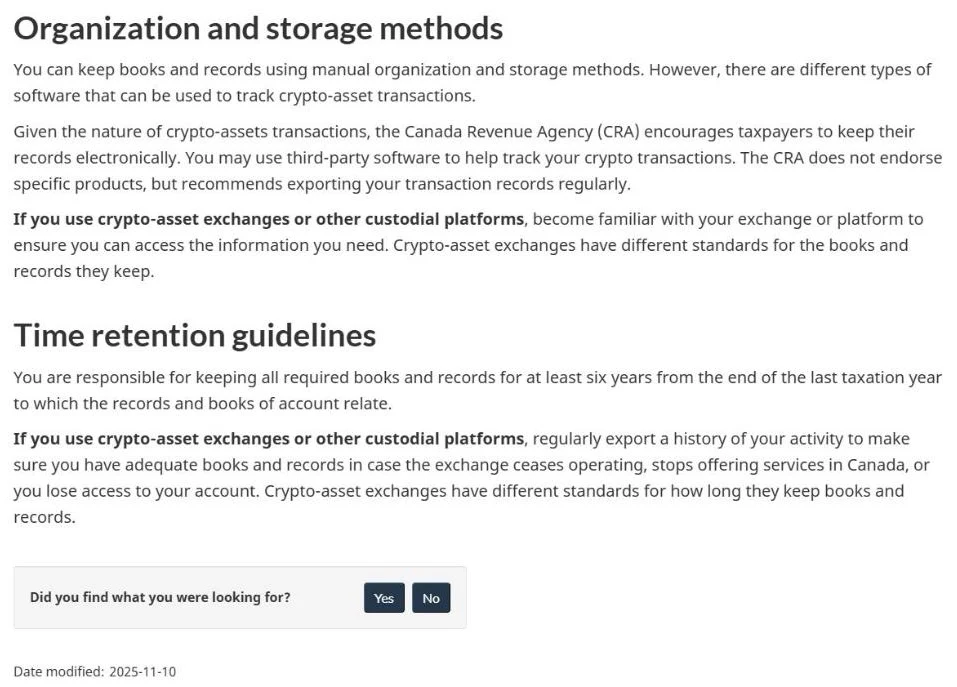
The CRA says to keep records for at least six years, and to export your history from each exchange regularly in case the exchange shuts down, leaves Canada or you lose access. Platforms do leave: our registered list includes several that are no longer registered.
Crypto tax software
The CRA says you may use third-party software to track your transactions, and doesn’t endorse any. Tools like these import your history from exchanges and wallets and work out your gains. Both offer a free plan for tracking and charge for the tax report itself.

Koinly has a Canadian version that generates a pre-filled Schedule 3, the capital gains form, and integrates with TurboTax. It says Canadian accounting firm MNP assessed its calculations as consistent with CRA guidance and the adjusted cost base method. Its free plan imports up to 10,000 transactions and previews your gains. Reports cost $49, $99 or $199 per tax year depending on how many transactions you have, shown to us in US dollars. It’s a one-time payment per year, with a 7-day refund if you haven’t generated a report.
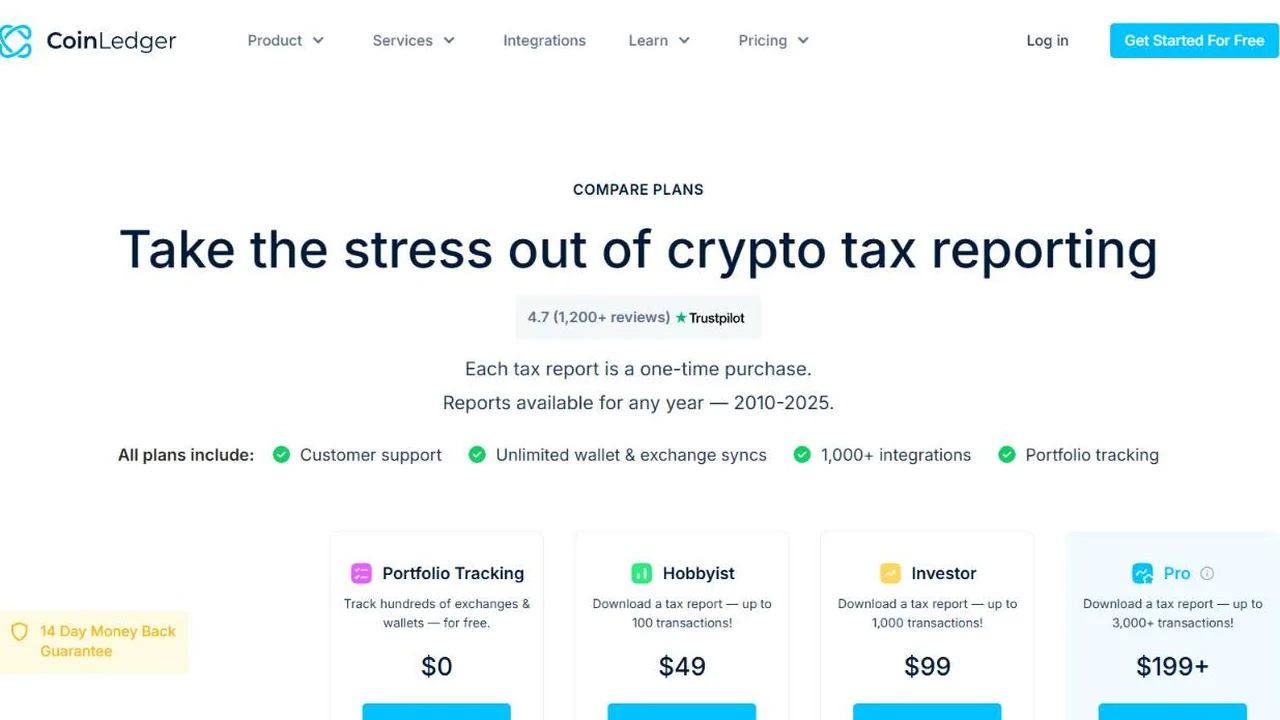
CoinLedger lists an adjusted cost method alongside FIFO and LIFO, and offers international tax reports. Its free plan covers portfolio tracking. Reports cost $49 for up to 100 transactions, $99 for up to 1,000 and $199 or more above that, shown to us in US dollars, as one-time purchases with a 14-day money-back guarantee.
Neither tool replaces checking your report. Software can misread a transfer as a sale, so look over the result, and keep your own exports as the CRA asks.
Frequently asked questions
Do I pay tax when I buy crypto?
No. Buying crypto with Canadian dollars isn’t a disposition. Tax comes in when you sell, trade, spend or give it away.
Is trading one crypto for another taxable?
Yes. The CRA lists exchanging one crypto-asset for another as a disposition, so you work out a gain or loss on the coin you gave up.
Do I have to report crypto if I made a loss?
You report dispositions whether you gained or lost. Reporting a capital loss lets you use it against capital gains in other years.
Are platform fees deductible?
The costs of buying crypto are added to your adjusted cost base, and the costs of selling reduce your gain, according to the CRA.
Does moving crypto to my own wallet count as selling?
No. The CRA says transfers between wallets you own aren’t taxable dispositions.
Sources
- Canada Revenue Agency, information for crypto-asset users and tax professionals
- Canada Revenue Agency, reporting income from crypto-asset transactions, modified 2 December 2025
- Canada Revenue Agency, keeping books and records of crypto-assets, modified 10 November 2025
- Canada Revenue Agency, reporting income from crypto-asset mining and staking
- Koinly, Canadian crypto tax software and pricing, 10 November 2026
- CoinLedger, pricing, 10 November 2026
Update history
- First published.
Found something out of date? Tell us.